
Rivers and lakes in southwestern Australia are dry more often and for longer periods due to climate drying.
Research shows that drying is already threatening the survival of native freshwater species living in these habitats, so that nature reserves alone cannot protect species. This project is investigating ways to protect native freshwater species and ensure their survival in the southwest.
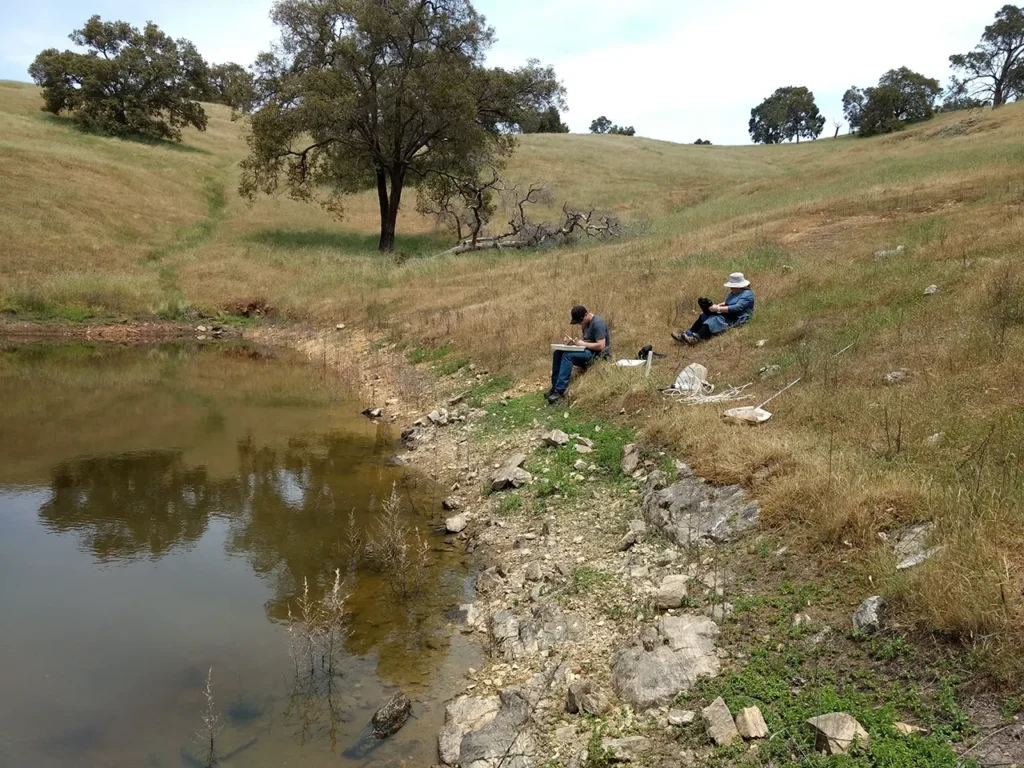
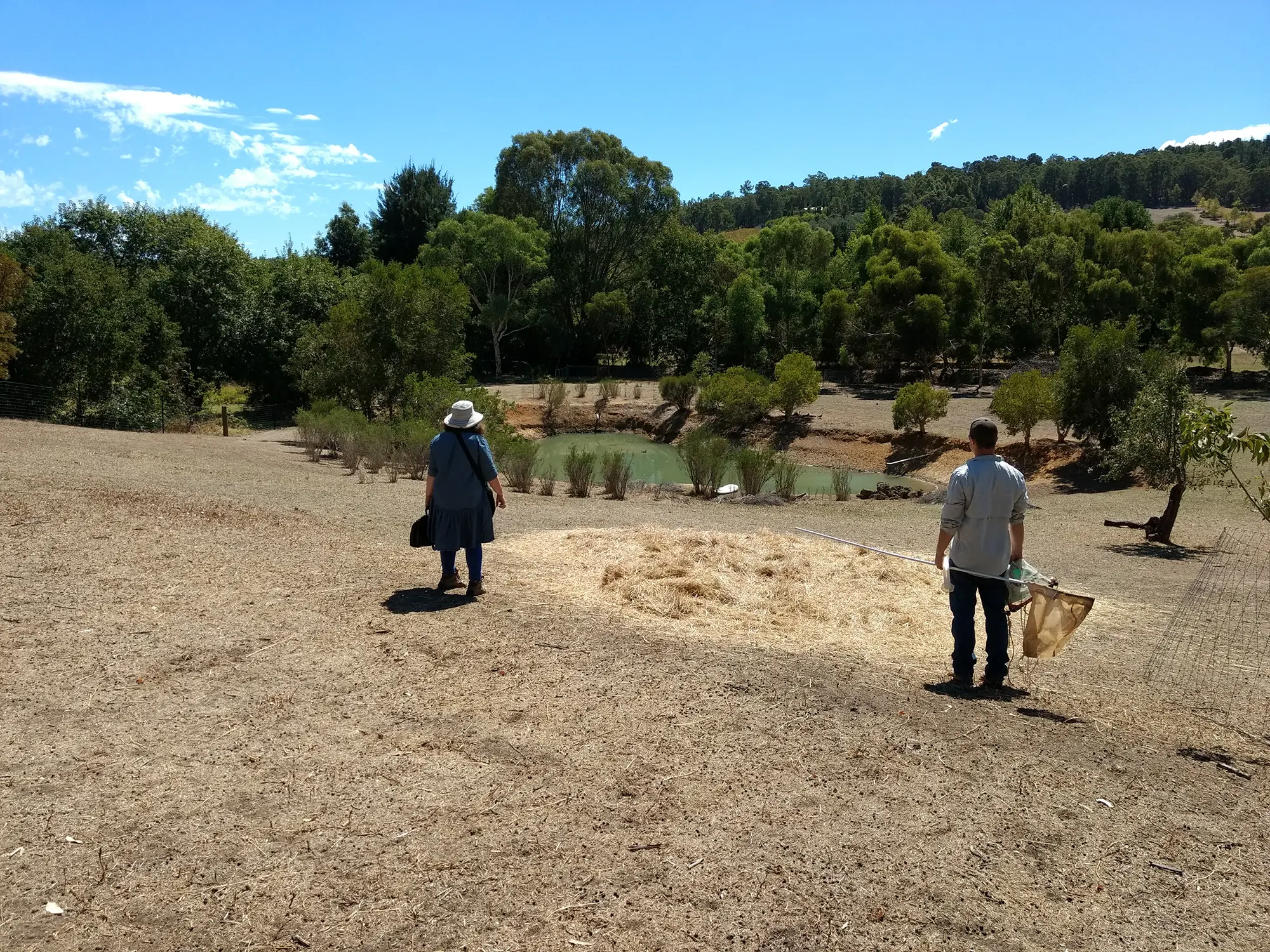
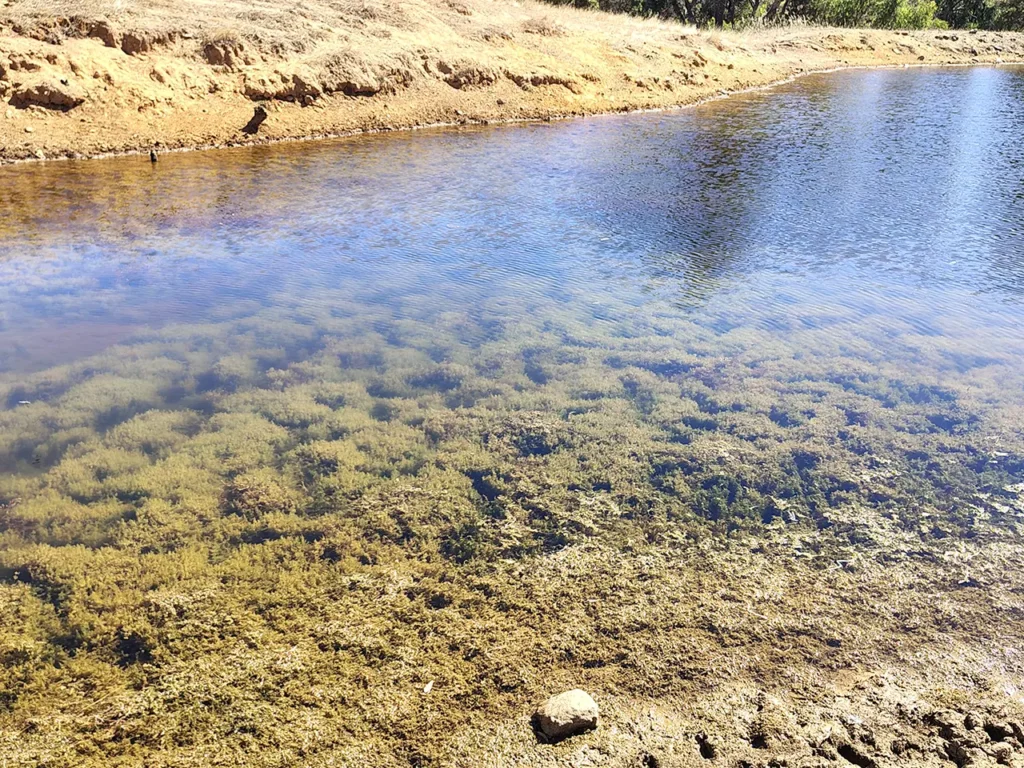
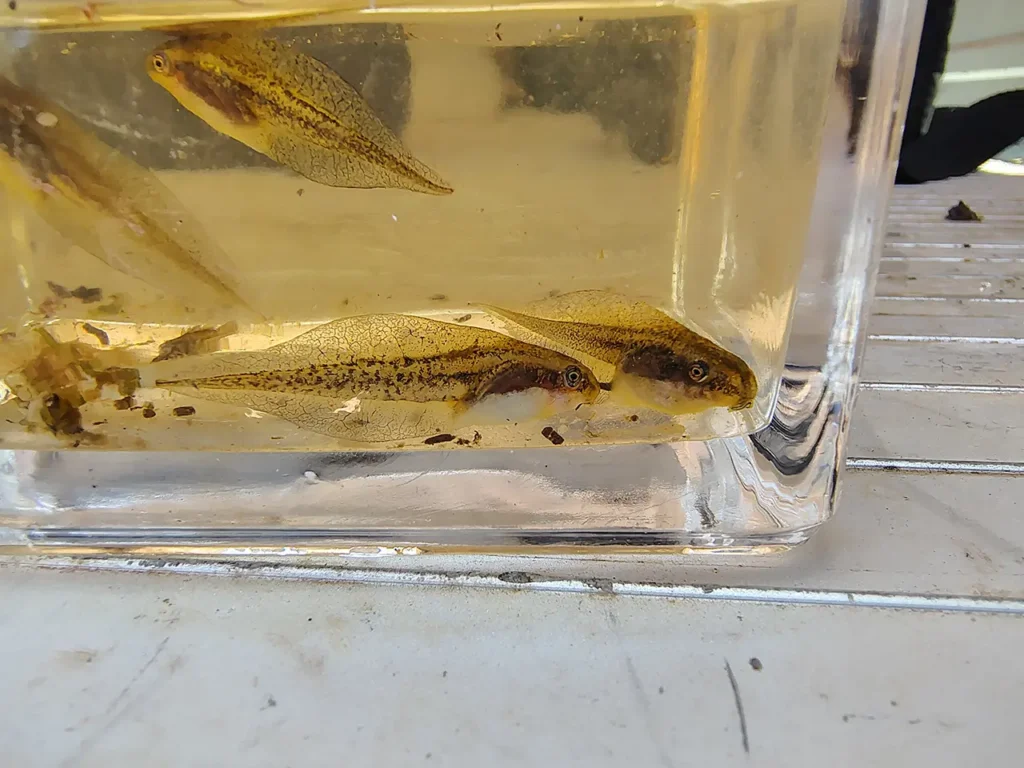
During drought and summer-autumn, most freshwater habitat present in rural areas is in farm dams. We studied more than 80 dams in the Perth Hills and Harvey regions and compared them to nearby natural lakes and streams. Our results show that farm dams supported tadpoles of all water-breeding frog species found in those regions, but some species were rarely found, so we need to continue to research their habitat needs for breeding. We found more than 20 species of native aquatic plants in farm dams; no exotic species were found. These plants were correlated with significantly higher invertebrate species richness than present in dams without plants. Invertebrate biodiversity supported by farm dams is high (>250 species) and only 5 species were exotic. Water quality in the dams was of a range of conditions equivalent to natural waterbodies in these regions. These results show that farm dams are already acting as drought refuges for native freshwater plants and animals.

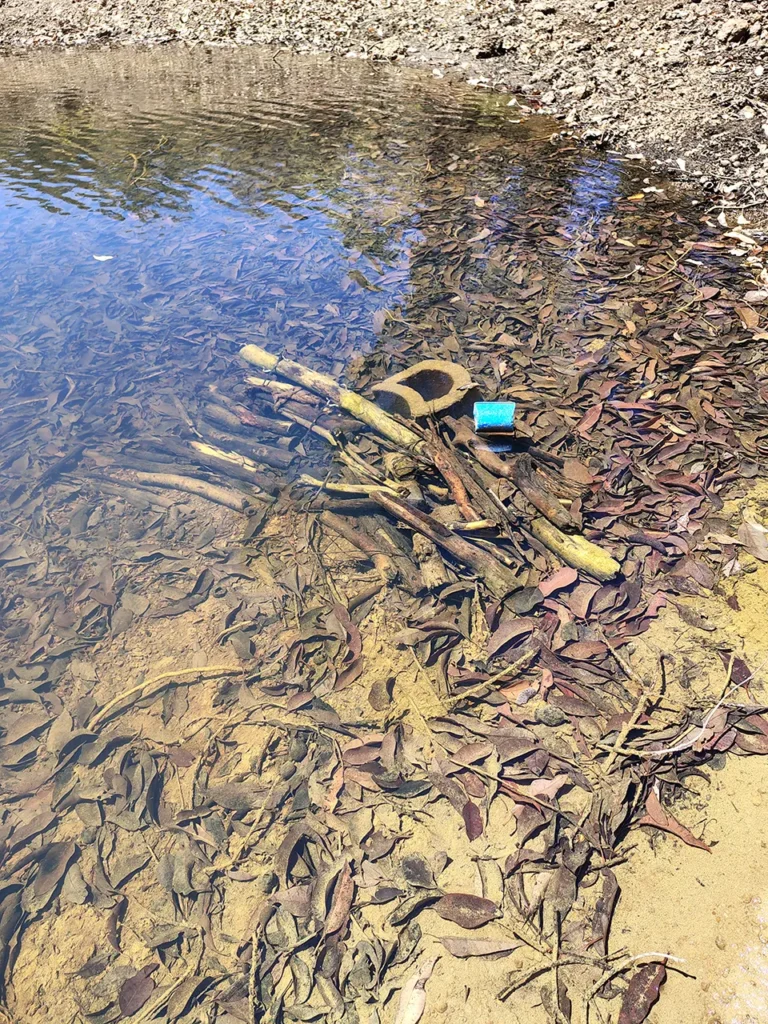
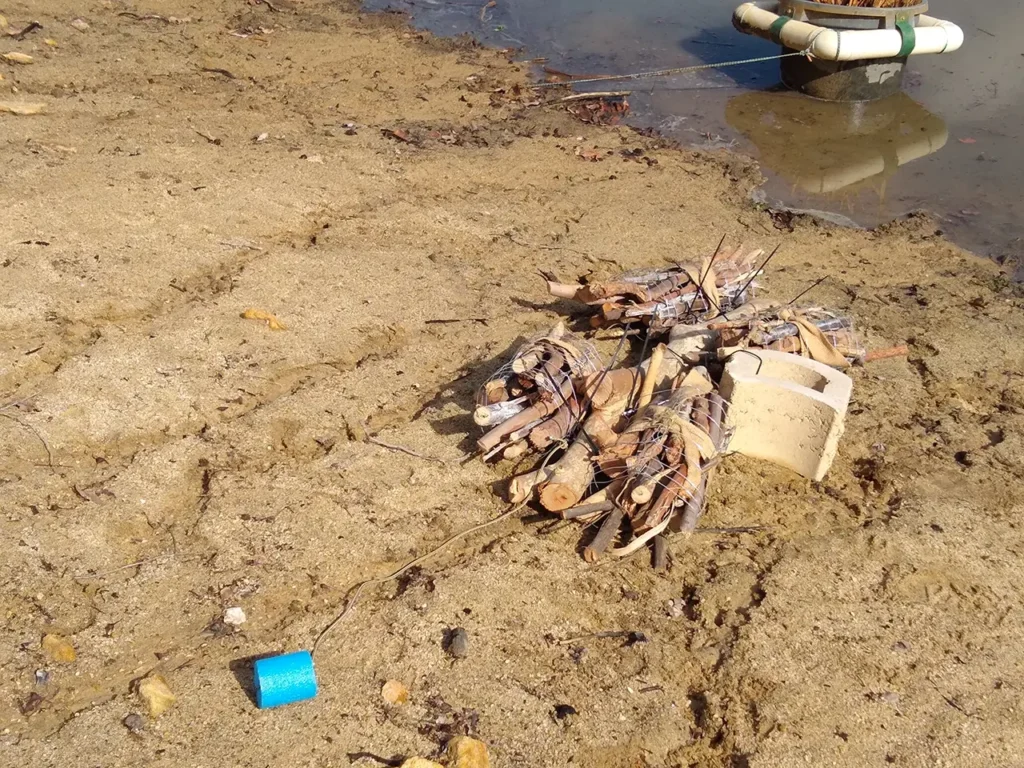
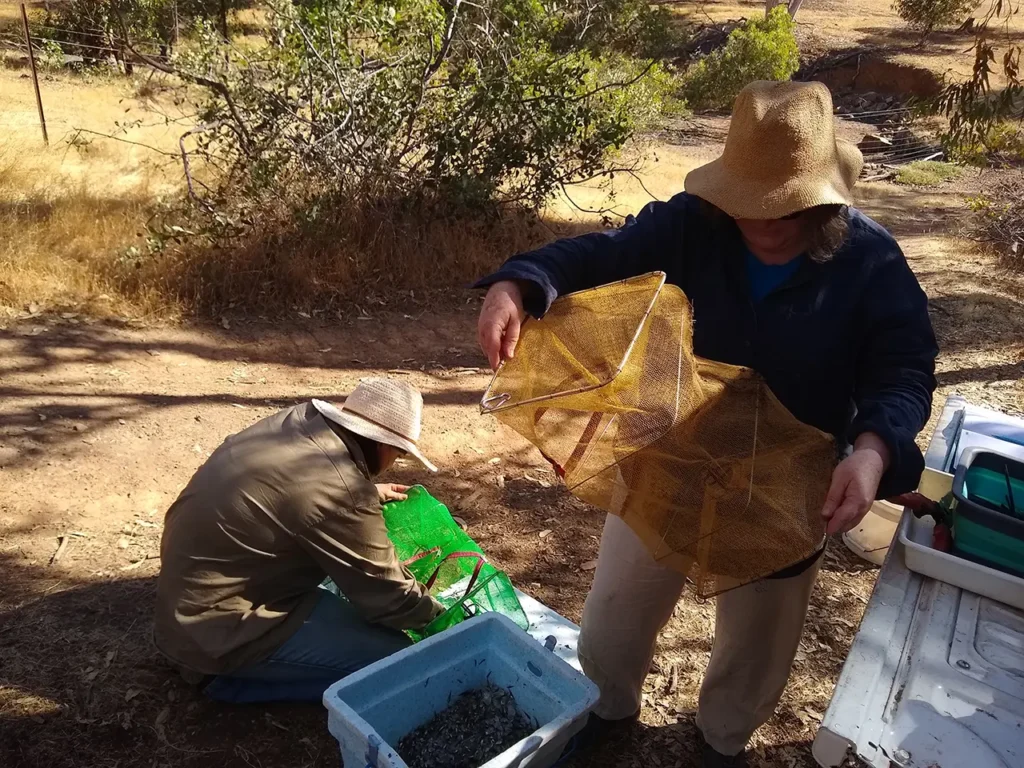
We also looked at two new ways to improve the capacity of farm dams to support native species: adding bundles of tree branches as habitat and reducing abundances of exotic plague minnows. Further information about these ways to improve the biodiversity capacity of a farm dam may be found in the report that can be downloaded below and in the links below to several videos reporting our findings.
Find out more in our Guidelines for managing farm dams to support native biodiversity PDF.
The project is novel and important because it:
- Compares animal and plant species living in farm dams to those in natural waterbodies, allowing us to identify qualities of dams associated with high biodiversity and which species can live and breed there.
- Tests the effectiveness of new approaches for managing habitat in dams to enhance biodiversity capacity.
- These new approaches were co-created with the community based on knowledge from the pilot project.
- AND they are designed to be easy and cheap to construct, suitable for landholders and communities.
- AND when used they still allow landholders to use dams for agricultural and household needs.
- Will show whether these new management methods work by trialling them in multiple dams.
- Involves private landholders and community members in managing dams and observing species use of dams.
- Collects information on species breeding and use of dams as adults and juveniles from a large number of dams (~100) at a landscape scale.
- Investigates one of few potential opportunities to halt extinction of native freshwater species.
- Will lead to the creation of guidelines for community and landholder management of dams



Contact
To be involved in data collection or attend project workshops, please contact rivers.system@dbca.wa.gov.au.
Location
Perth Hills – City of Swan, City of Kalamunda, Shire of Mundaring, Shire of Chittering
Harvey region – catchments of the Harvey River, Dirk Brook, Serpentine River.